


Fuzzy Invasion of Domestic Rabbits Has a Florida Suburb Hopping Into a Hunt for New Owners 

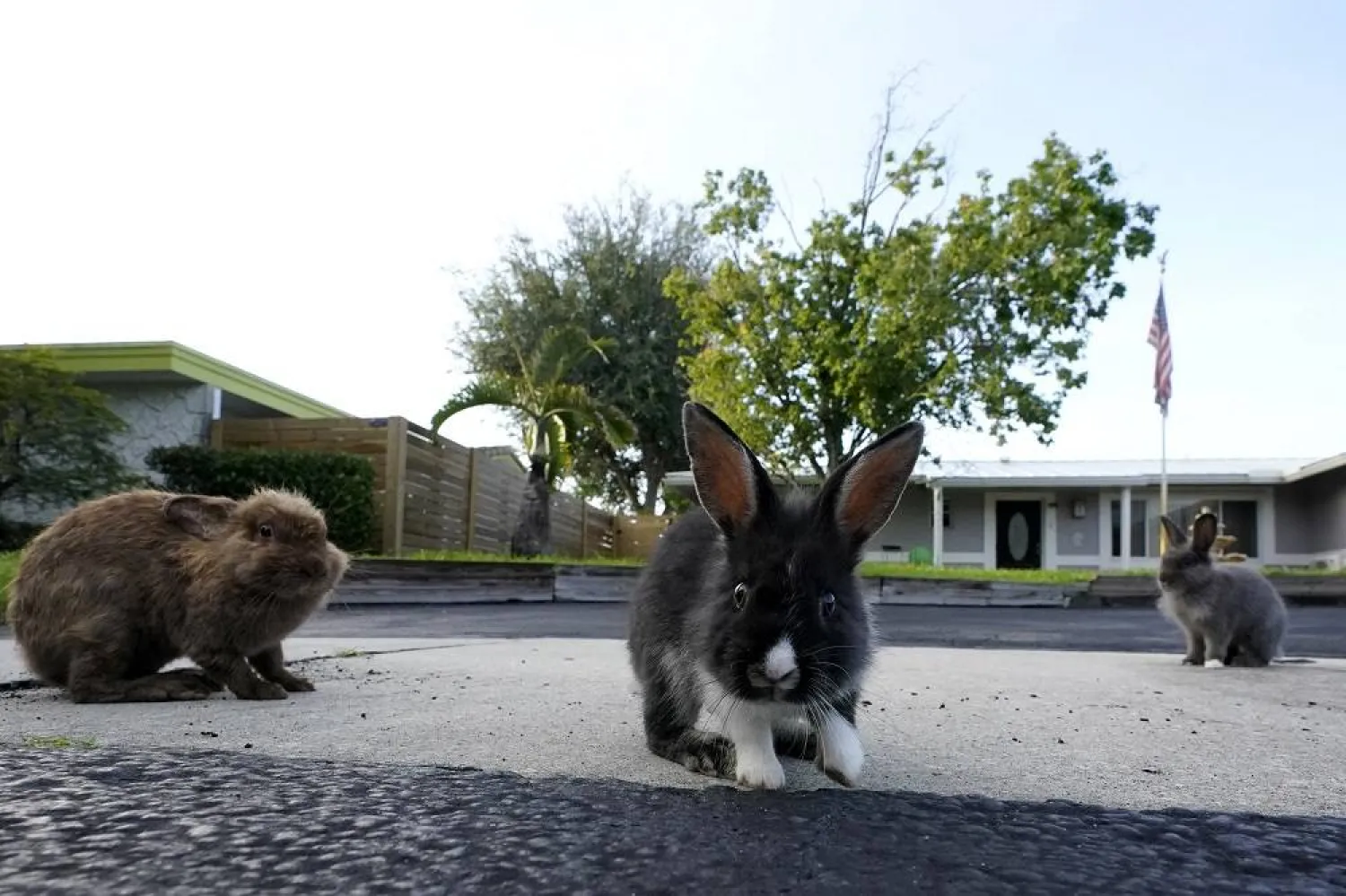
A trio of rabbits gather on a driveway, Tuesday, July 11, 2023, in Wilton Manors, Fla. (AP)
TT

Fuzzy Invasion of Domestic Rabbits Has a Florida Suburb Hopping Into a Hunt for New Owners 

A trio of rabbits gather on a driveway, Tuesday, July 11, 2023, in Wilton Manors, Fla. (AP)

When Alicia Griggs steps outside her suburban Fort Lauderdale home, Florida's latest invasive species comes a-hoppin' down the street: lionhead rabbits.

The bunnies, which sport an impressive flowing mane around their heads, want the food Griggs carries. But she also represents their best chance of survival and moving where this domesticated breed belongs: inside homes, away from cars, cats, hawks, Florida heat and possibly government-hired exterminators.

Griggs is spearheading efforts to raise the $20,000 to $40,000 it would cost for a rescue group to capture, neuter, vaccinate, shelter and then give away the estimated 60 to 100 lionheads now populating Jenada Isles, an 81-home community in Wilton Manors.

They are descendants of a group a backyard breeder illegally let loose when she moved away two years ago.

"They really need to be rescued. So we’ve tried to get the city to do it, but they’re just dragging their feet," Griggs said. "They think that if they do that, then they’ll have to get rid of iguanas and everything else that people don’t want around."

Monica Mitchell, whose East Coast Rabbit Rescue would likely lead the effort, said capturing, treating and finding homes for them "is not an easy process." Few veterinarians treat rabbits and many prospective owners shy away when they find out how much work the animals require. Griggs agreed.

"People don’t realize they’re exotic pets and they’re complicated. They have a complicated digestive system and they have to eat a special diet," said Griggs, a real estate agent. "You can't just throw any table scraps at them."

Wilton Manors is giving Griggs and other supporters time to raise money and relocate the rabbits rather than exterminate them, even though the city commission voted in April to do just that after receiving an $8,000 estimate from a trapping company.

The vote came after some residents complained the lionheads dig holes, chew outdoor wiring and leave droppings on sidewalks and driveways. City commissioners also feared the rabbits could spread into neighboring communities and cities and become a traffic hazard if they ventured onto major streets.

"The safety of this rabbit population is of utmost importance to the City, and any decision to involve ourselves will be certain to see these rabbits placed into the hands of people with a passion to provide the necessary care and love for these rabbits," Police Chief Gary Blocker said in a statement.

The Florida Fish and Wildlife Conservation Commission, which often culls invasive animals, has told the city it will not intercede. The rabbits pose no immediate threat to wildlife.

Lionhead rabbits aren't the only invasive species causing headaches or worse for Floridians. Burmese pythons and lionfish are killing off native species. Giant African snails eat stucco off homes and carry human disease. Iguanas destroy gardens. Like the Wilton Manors lionhead rabbits, those populations all started when people illegally turned them loose.

But unlike those species, Florida's environment is not friendly to lionheads. Instead of the 7 to 9 years they live when properly housed, their lives outdoors are nasty, brutal and shortened.

The lionheads' heavy coat makes them overheat during Florida summers and their lack of fear makes them susceptible to predators. Munching on lawns is not a healthy diet. Their illnesses go untreated. They need owners.

"Domesticated (rabbits) released into the environment are not equipped to thrive on their own," said Eric Stewart, executive director of the American Rabbit Breeders Association. He said the breeder who released them should be prosecuted, a path the city has not pursued.

The Wilton Manors colony survives and grows only because lionheads breed like the rabbits they are, with females birthing litters of two-to-six offspring every month, starting when they are about 3 months old.

On a recent morning in Jenada Isles, clutches of two to 10 bunnies dotted the streets and lawns, the bravest hopping up to residents and visitors in search of treats.

A large group of rabbits gathered on the driveway of Gator Carter, who puts out food for them. He said the lionheads bring the neighborhood joy, and his two young grandchildren love giving them carrots.

"People drive by, stop, love ’em, feed ’em," Carter said. "They don't bother me. We have a couple Airbnbs on the island here and the people (guests) are just amazed that the rabbits come right up to them."

But Jon King said he wants the rabbits gone soon. They dig in his yard and he spent $200 repairing his outdoor lights after they damaged the wiring. He bought rabbit repellent, but that didn't work, and his little dog doesn't scare them: "He's their best friend."

"Every morning, I get up and first thing I do is cover up the holes and chase them out of the backyard. I like them, I just wish they would go somewhere else," King said. "Rescue would be great."



Sudanese Artists Cling to Their Craft in a Displacement Shelter

Residents receive aid from World Food Program (WFP) at Al-Omada neighborhood of Omdurman, the twin city of Khartoum on March 11, 2026. (AFP)
TT

Sudanese Artists Cling to Their Craft in a Displacement Shelter

Residents receive aid from World Food Program (WFP) at Al-Omada neighborhood of Omdurman, the twin city of Khartoum on March 11, 2026. (AFP)

At a school-turned-shelter in Port Sudan, rehearsal is a modest affair, but three years of war and the humble surroundings do little to dampen the sweet tunes rising from the two musicians.

With piles of bedding pushed to the side, the lone singer croons along to the melodies of a keyboardist -- part of a group of some 120 Sudanese artists who fled the brutal fighting between the army and the Rapid Support Forces.

In the courtyard downstairs, actors, screenwriters, painters and directors work in the sunshine, before retreating to their dormitories at night.

"It's like our own little cultural center," says visual artist Mohira Fathi, who fled the central state of Al-Jazira with her husband and son.

But the El-Rabat center is a far cry from the countless other shelters in the army's wartime capital of Port Sudan, where disease outbreaks and unrelenting hunger stalk tens of thousands.

Across the country, over nine million people are internally displaced and a record 33.7 million are in need of aid.

Like everyone else, these artists came to the army's wartime capital of Port Sudan on the Red Sea exhausted, traumatized and destitute.

"When I arrived, there weren't even any fans to help with the sweltering heat. People were sleeping on mats on the floor, with no access to water," musical troupe director Hossam al-Din al-Taher told AFP.

- 'Blessing' -

Slowly, as the war dragged on, word spread of a makeshift artists' commune forming, and people started flocking to the school in the hopes that being around fellow artists would help keep their careers alive.

"We didn't have instruments or costumes," Taher remembers, and artists had to take on odd jobs to earn a living, pooling their money together to buy a guitar here, a set of paints there.

Now, Taher conducts a small orchestra between piles of luggage.

For filmmaker Mohamed Ali Ibrahim, "it's a blessing that all of these artists found each other in the same place."

They share everything: food, money, mid-rehearsal coffees, living quarters separated only by fabric sheets, and every gig that comes their way.

Three years of war have destroyed Sudan's cultural scene. Theaters, studios and museums have been shut down or looted, while many of Sudan's top artists have fled across borders.

But El-Rabat's artists make do. They've put on shows for the neighborhood, held local photography exhibitions and, this Ramadan, had some of their actors return to the airwaves in a modest radio drama.

"We've learned there is no giving up," musician Assem Abdel Aziz told AFP after rehearsal.

"We have dreams here, that yard outside is full of dreams, full of energy," he says, flanked by a drum kit to his left and a mosquito net-covered cot to his right.


Fetching Votes: In Paris Mayor’s Race, Dogs Dominate Campaigns

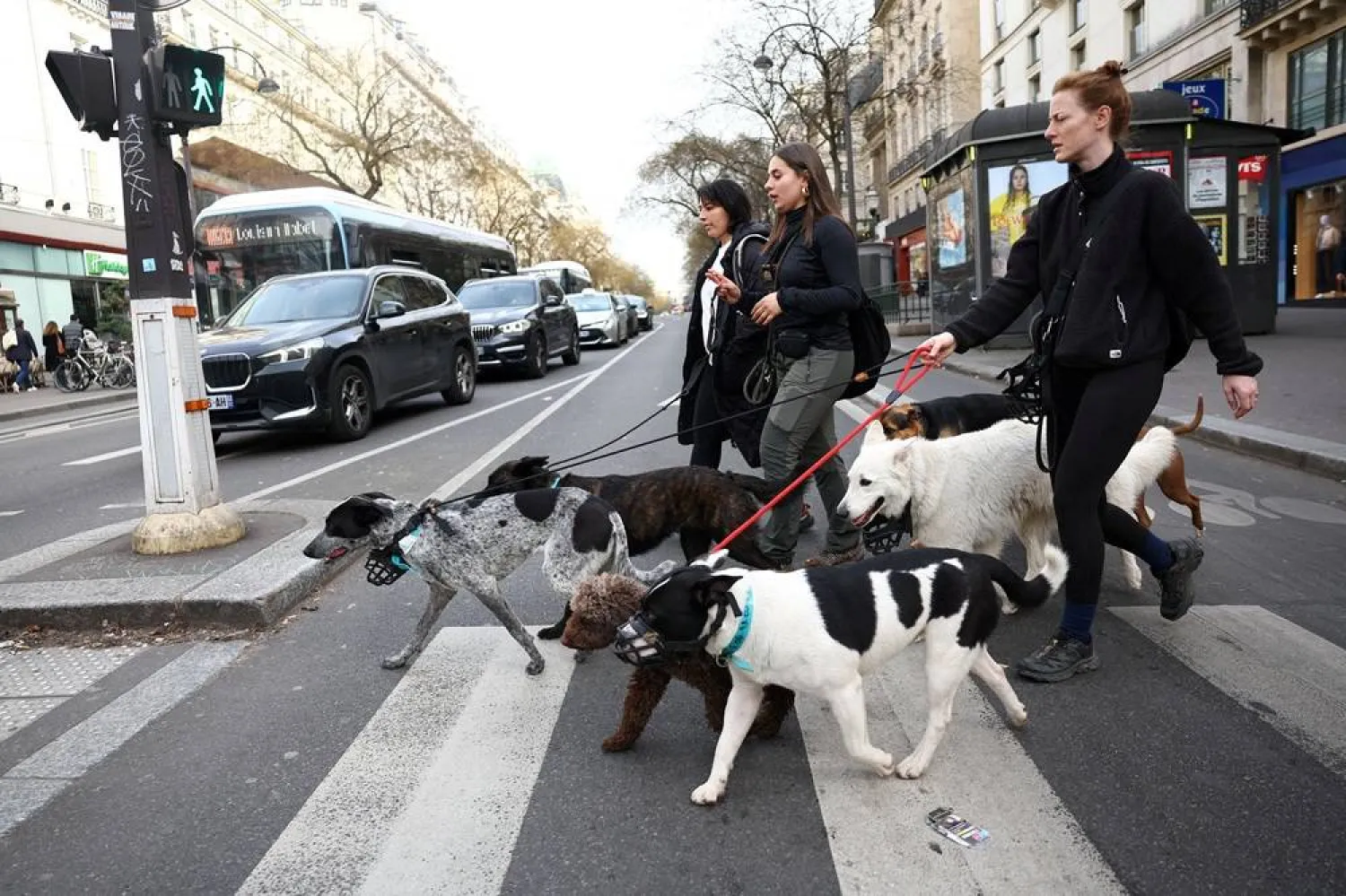
People walk dogs on a pedestrian crossing in Paris, France, March 6, 2026. (Reuters)
TT

Fetching Votes: In Paris Mayor’s Race, Dogs Dominate Campaigns

People walk dogs on a pedestrian crossing in Paris, France, March 6, 2026. (Reuters)

Paris will choose a new mayor on Sunday, with one unlikely issue dominating campaigns alongside all the partisan acrimony - dogs.

Candidates from socialists to conservatives have set out policies to deal with an issue which voters have regularly ranked among their top concerns, a lack of space for the capital's estimated 100,000 canines.

"Paris isn't exactly a very dog-friendly capital," said Vincent Danna, founder of the Monceau Dog Club, a group of around 1,000 owners who have campaigned for more open spaces for their pets.

"It can indeed be a decisive factor in municipal elections. I think the candidates have understood that well."

Rachida ‌Dati, the conservative ‌candidate backed by President Emmanuel Macron, has filmed herself ‌with ⁠dogs on the ⁠campaign trail and told Reuters she would create new parks where owners can take their dogs for walks, or even let them run free.

"We're going to develop dog parks specifically to create these shared spaces. And not just for the sake of shared spaces, but so people can bring their pets along freely, without being bothered or judged. That's the idea," Dati ⁠said.

Socialist Emmanuel Gregoire, who led the first round of voting ‌last Sunday, has also committed to ‌expanding outdoor spaces for pets.

"The main goal is to have outdoor spaces where ‌animals can live as comfortably as possible," Gregoire told Reuters.

Sophia Chikirou, from ‌the hard-left LFI party who came third in the first round, has proposed letting owners take their dogs on all forms of public transport.

Pets have long played a role in French political life. Every president since Charles de Gaulle has ‌owned at least one dog. Far-right leader Marine Le Pen studied to get a cat-breeding diploma in 2021.

An Ifop ⁠poll in ⁠February showed 58% of French voters saw animal welfare as a priority issue in their municipality. So far, activists have taken the lead.

Following pressure from the Monceau Dog Club, the park of the same name has let dogs run free in a dedicated area in the first trial of its kind in the capital.

Still, not everyone is convinced dogs will make a difference in the second and final round of voting this weekend.

"If you ask me whether a dog plan is going to sway my vote one way or the other, I would say no. Because I think there are perhaps more important things," local resident Marie-Christine Alary said.

"But I do think it's a very good thing."


Fans of Niche Japanese Crisps Brand Panic After Oil Shortage Halts Production

A shopper checks food items at a supermarket in Tokyo, Japan January 20, 2023. (Reuters)
TT

Fans of Niche Japanese Crisps Brand Panic After Oil Shortage Halts Production

A shopper checks food items at a supermarket in Tokyo, Japan January 20, 2023. (Reuters)

Die-hard fans of ‌a niche Japanese crisps brand took to the internet on Tuesday to lament a production halt the snack maker Yamayoshi Seika blamed on a shortage of cooking oil caused by the conflict in the Middle East.

The US and Israel's war on Iran and the resulting effective closure of the vital Strait of Hormuz have fuelled fears of a knock-on impact on prices in ‌Japan. But news ‌of the crisps brand's suspension is ‌among ⁠the first tangible ⁠fallout for consumers.

Once the news spread, Yamayoshi Seika's "Wasabeef" became the third-most trending buzzword in Japan on social media platform X, with the company name trailing not far behind.

"I never expected the closure of the Strait of Hormuz to result in ⁠the production stoppage of Wasabeef," ‌user @JoshuaGboyega5 posted on X. "I ‌can't imagine life without Wasabeef!"

CEO Satoshi Kada said Yamayoshi ‌Seika's heavy oil wholesaler had warned him in ‌early March of an expected price hike of 20% to 30% and soon after said it could no longer send any supplies.

"We had no choice but ‌to stop the factory," he told Reuters, adding that he did not know ⁠when ⁠production could resume.

Yamayoshi Seika, which was established in 1953, calls Wasabeef a "national brand" characterized by a flavor blending wasabi and savory beef essence. The company has monthly sales of about 400 million to 500 million yen ($2.5 million to $3 million), Kada said.

Japan, which depends on the Middle East for around 95% of its crude oil supplies, this week began releasing about 80 million barrels of oil from its strategic reserves to mitigate disruptions.